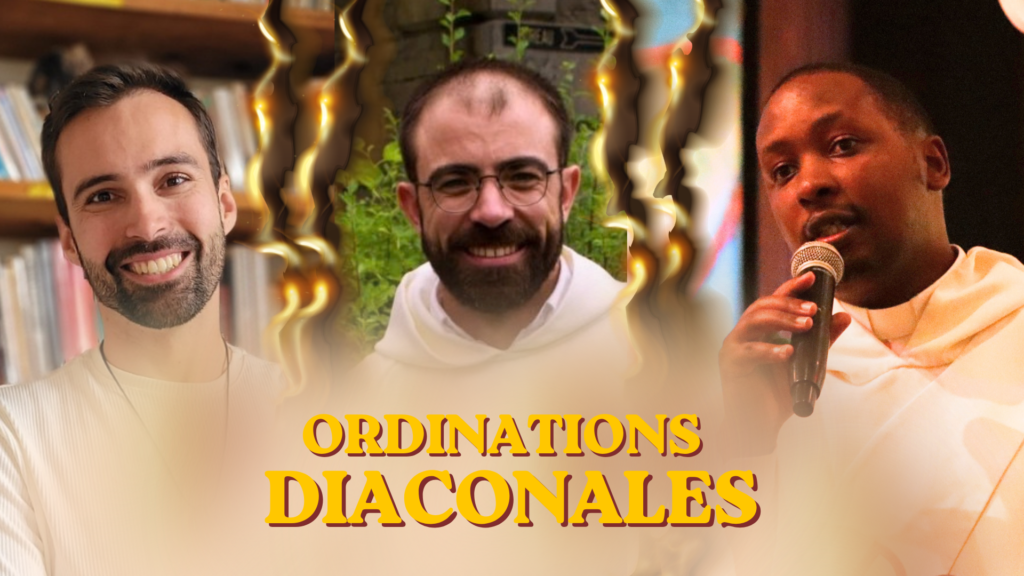
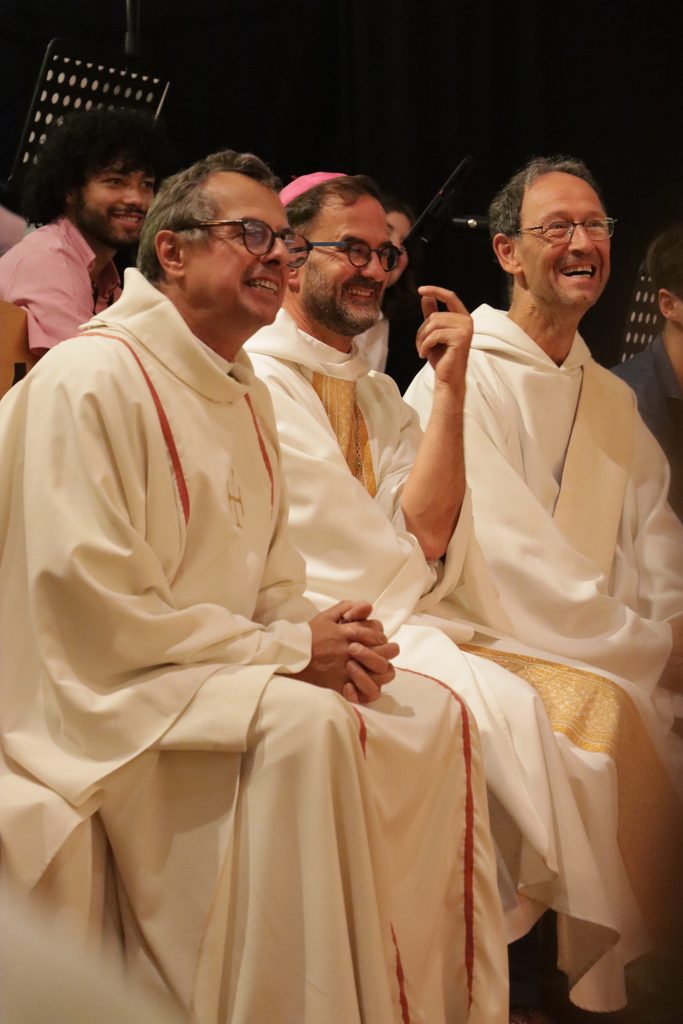
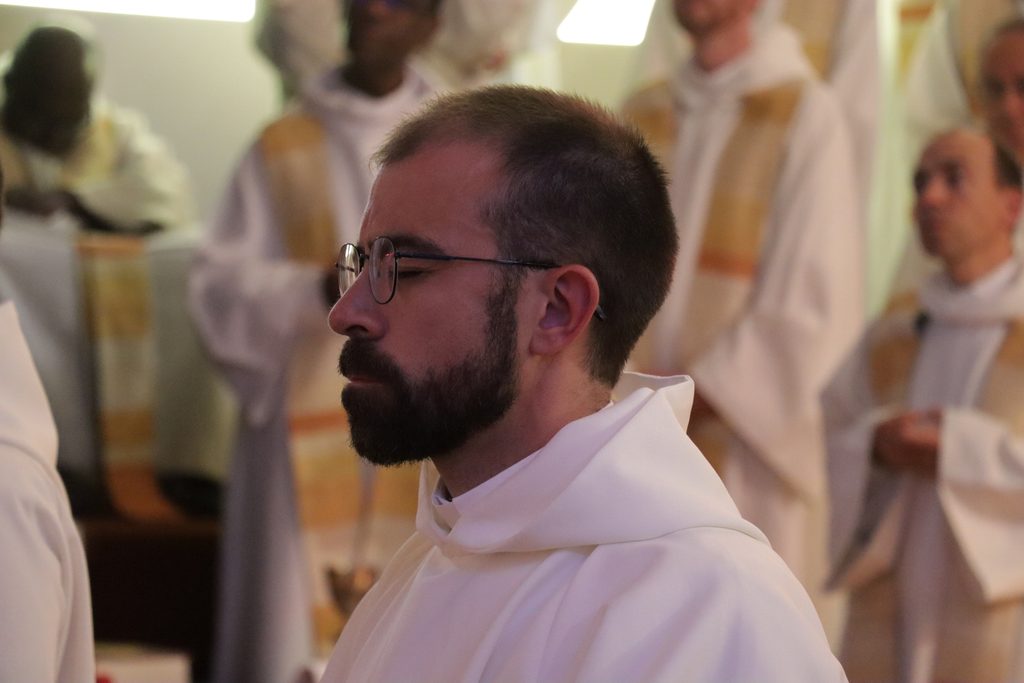
On the red carpet of the Paul Couturier Chapel, about 100 meters from the Lyon-Perrache train station, three new deacons from the Chemin Neuf Community were ordained.
Diógenes Fonseca Lima, Matthieu Leprêtre, and Prudent Bayizere have taken another step on the path to the priesthood.
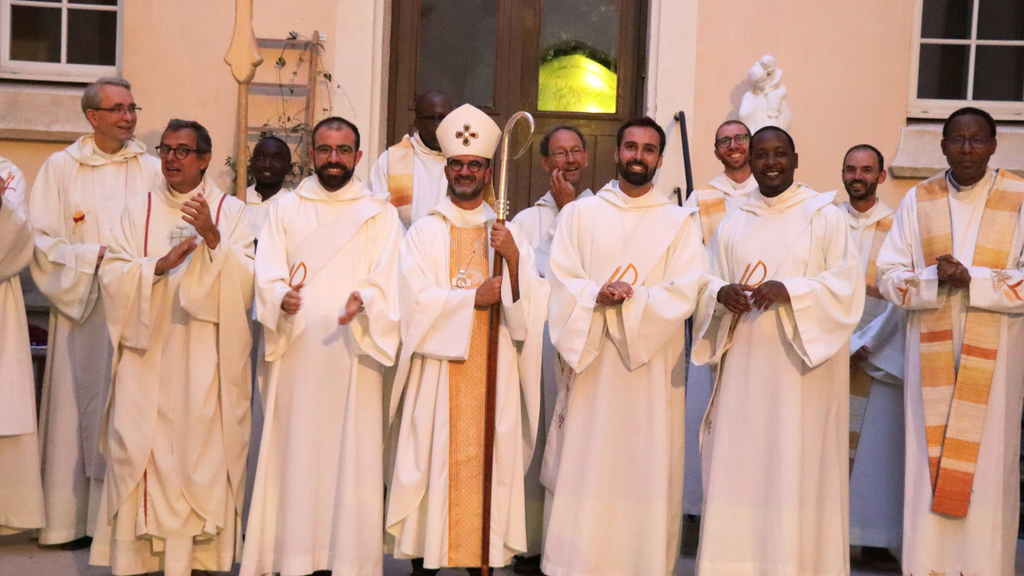
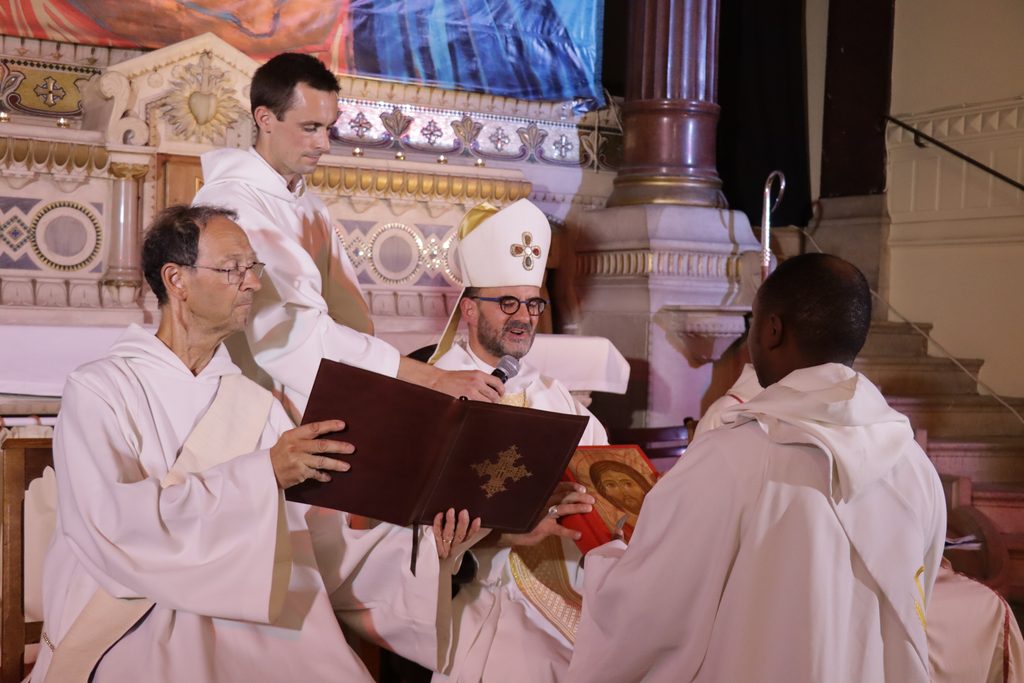
During a Mass presided over by Bishop Loïc Lagadec, the auxiliary bishop of Lyon urged the three new deacons to seek to serve their brothers rather than to be served. In fact, the word “deacon” comes from the Greek word “diaconos,” which means “servant”.
“Be deacons to the people of forgiven sinners, striving to be merciful, just as the Father is merciful, and striving to free them from the burden of evil in our lives,” he asked them.
This church leader also emphasized the missionof “being a servant of the poor first and foremost, and especially of the truly poor .” He underscored the importance of serving the most disadvantaged “in all three of your lives, and may your diaconate be a sign that this is important for the community and for the entire Church, ” he added.
The bishop explained that Christ did not come to be served, but to serve, and that he placed the least of these, the marginalized, and the poor at the center of his mission.
During the ceremony, as Bishop Lagadec presented each person with a copy of the Gospel, he urged them to “be mindful to believe in the words you speak, to teach what you have believed, and to live out what you have taught.”
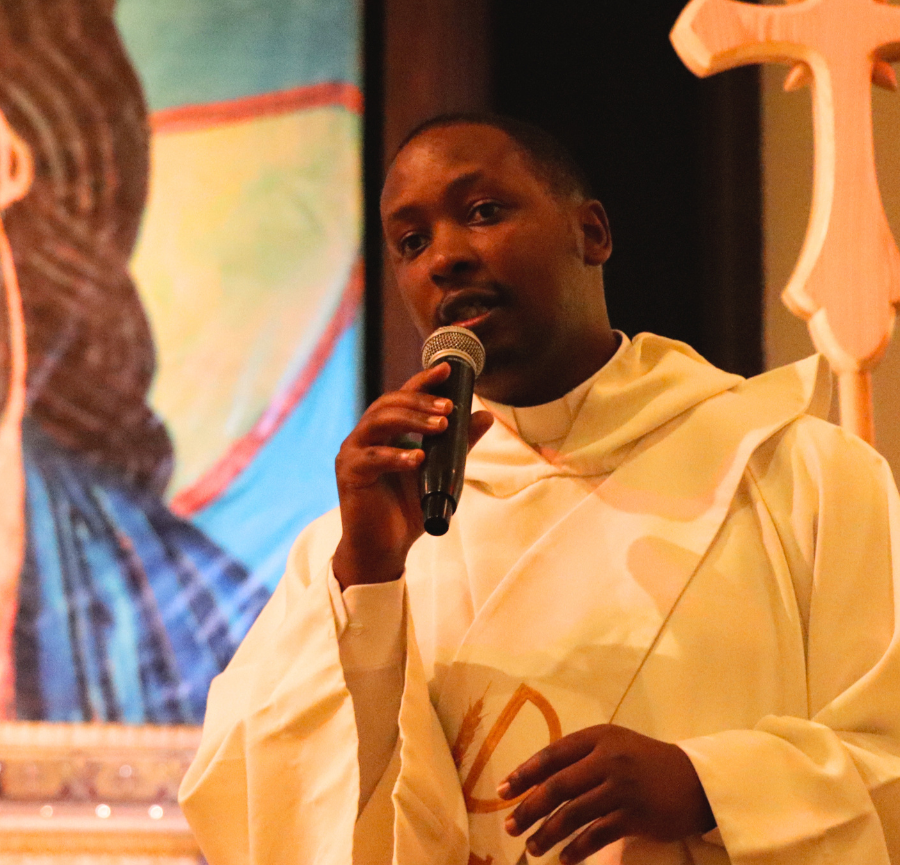
What is it like to be ordained a deacon today?
By François Hohwald, permanent deacon in the Diocese of Strasbourg.
Our brothers were ordained deacons in preparation for the priesthood; this is somewhat different from the permanent diaconate, because for them it is a step toward the priesthood, but the spirit of the diaconate is very much the same.
The permanent diaconate was reestablished by the Second Vatican Council in the decree Lumen Gentium (Chapter III, 29. Deacons) of November 21, 1964.
The key biblical passage concerning the diaconate is found in the Acts of the Apostles: Acts 6:1–6.
The aspect of Christ that most closely parallels the diaconal ministry is indeed that of Christ the Servant, particularly as seen in the washing of the feet: John 13:1–17.
Thus, in the Catholic Church, the foundation of the diaconal ministry is the Service : within his marriage, if the deacon is married; in his work, if the deacon is employed; in the Church, with those seeking the sacrament of Baptism or the sacrament of Marriage, in the Church’s many ministries, in liturgical service, and also with people who are vulnerable, sick, disabled, poor, marginalized, or abandoned, …
The Ministry of Service will then be established alongside the Ministry ofHome and thelisten with respect for the uniqueness and dignity of every human person, created by God in His image.
Throughout the world, the deacon—as a minister of God’s love through service and charity—may be the subject of questions or inquiries from people of our time, from those seeking meaning in life and seeking God. His ministry will often take place among people outside the Church who are seeking the faith. The diaconal ministry is a missionary ministry, reaching out to everyone, regardless of their quest.
Let us pray that the diaconal ministry of our brothers—and every ministry in the Church—may bear fruit, much fruit, for the greater glory of God.